A Bedroom to Sleep In
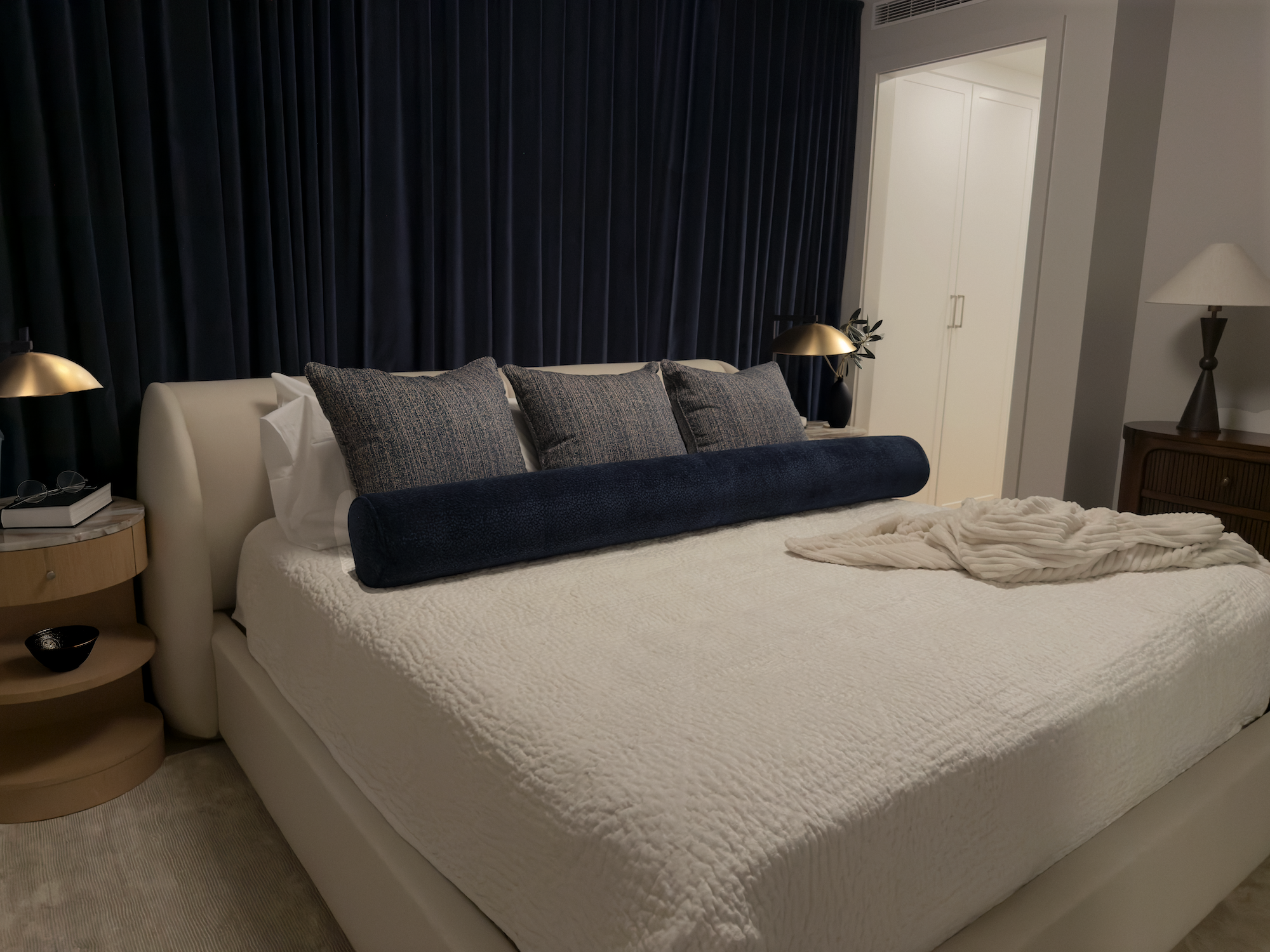
A “room to sleep in” from a recent project.
There is a disagreement we see when working with couples in their homes, and it’s a delicate one, because it lives in the bedroom.
One of them wants sheers, the morning light through the glass, the room brightening on its own to the sound of birds chirping. The other wants weight, lined drapery for a room that goes properly dark, the feeling of being held rather than displayed to the early morning birds. It’s a small subtle distinction but changes the way each want to use the bedroom.
Some people want a room to sleep in. Others want a room to wake up in. Neither is right, but both. need to be taken into consideration for a harmonious and working bedroom.
Bedroom design for better sleep starts before the furniture
Most advice about sleeping better in a bedroom starts at the window and works inward. Designing for living well at home starts with the floorplan and the movement in the space. Always start there before considering sound and light dampening treatments.
If an apartment in New York City is on an avenue, it has a loud side and a quiet side. The avenue usually carries most of the noise of the bustling city and the developers thoughtfully considered that by moving the primary bedroom away from the avenue side as they remodeled it from a classic six to a more modern three bedroom, two and a half bath layout. Great intent, but it also posed a few other challenges.
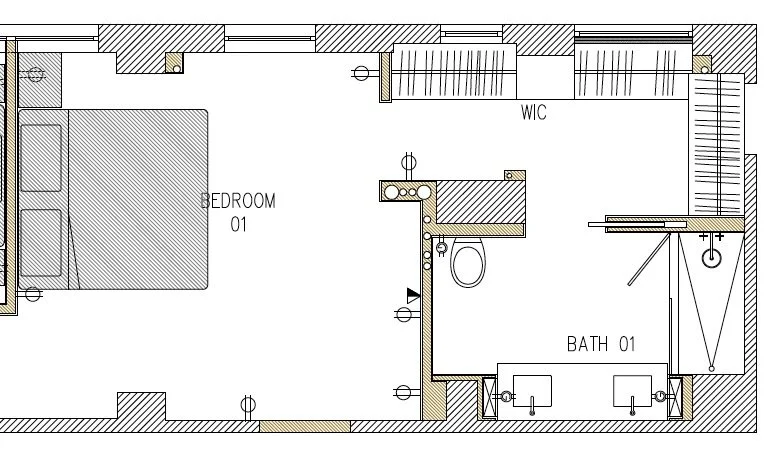
Initial Floorplan from Renovator
They planned for a kingsize bed to fit, but not a bedframe, 2-3’ around the bed to maneuver, or nightstands on either side. For this project investigated a few layout considerations and custom bed frames to make the space for the clients.
When designing “a room to sleep in”
An international expert consensus published in 2022 recommends keeping the sleeping environment below one lux of melanopic illuminance for a good night’s rest. That is darker than a room with a light outside and a roman blind on the windows. If you’ve been in a hotel with blackout shades and could see the red light of the TV glowing on the wall, that’s the recommendation, but a little extreme if you have to get up in the middle of the night; where can you find the subjective balance?
On darkness:
Ordinary room light in the evening measurably suppresses and delays melatonin, and individual sensitivity varies enormously, by more than an order of magnitude between people. That said, if you move toward warmer light at night (3000k - 2700k) from a lamp, studies have shown a 10% increase in melatonin production.
On light during sleep:
A controlled study found that a night under moderate room light, rather than near darkness, raised night-time heart rate and worsened next-morning insulin sensitivity. It was twenty people, split into two groups, over two nights. Large observational work, including nearly ninety thousand people wearing light sensors in the UK Biobank, associates brighter night-time light with worse cardiovascular outcomes over years. Nobody should tell you that light leak causes heart disease, but sleeping with exterior lights leaking in is not a recipe for success; go with the 75% shading rate if you have a lot of light outside your windows when you go to bed.
On noise:
The World Health Organization's 2018 European guidelines make a strong recommendation to reduce night-time road traffic noise below 45 decibels, measured outside at the façade. Note that it is an outdoor figure. Indoor levels depend on your glazing, your wall materials, floor textiles, and your drapery but there are a number of solutions to keep noise from your neighbors (or other rooms) from impacting your sleep.
On blackout curtains specifically:
There is no controlled trial showing that blackout treatments improve measured sleep. The evidence is for darkness, not for the product. Heavy lined drapery is the practical means of getting a city bedroom near that one lux condition, which is a reasonable inference and not a proven claim, and anyone selling it to you as proven is selling you curtains.
On temperature:
Cooler is better, and the widely repeated sixty-five to sixty-eight degree figure is proven to be best for sleep. The right temperature depends heavily on your bedding and what you sleep in. The in-home data we trust most, gathered from older adults sleeping in their own bedrooms, puts the useful range higher than the internet's number. Bedding is also quite significant in managing a good nights rest.
Impact on the Design
We had three problems to design for: a room to sleep in, elevate the room so it feels like a primary bedroom and not an afterthought, and plan for function in the room on busy mornings and lazy weekends.
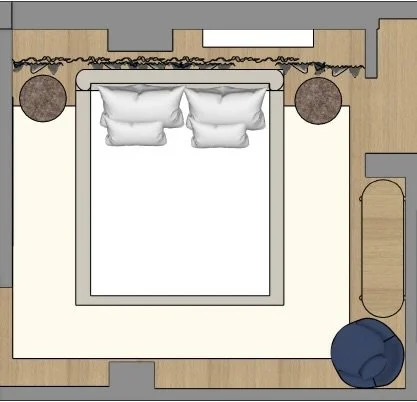
Proposed Floorplan
The result was to reorient the bed to allow for mobility, nightstands, and early morning runs to the gym without distrubing their partner. A double drapery run of sheers and blackout curtains carried floor to ceiling and wall to wall does something no individually treated window can. Two unequal openings stop reading as a mistake the moment the eye sees one continuous plane of cloth. The weight that makes it look that way is the same weight that closes the light leak at the edges and takes the hard top off exterior noise. On lazy mornings the drapes, sheers and windows can be opened for a lovely cup of coffee with a glossy magazine.
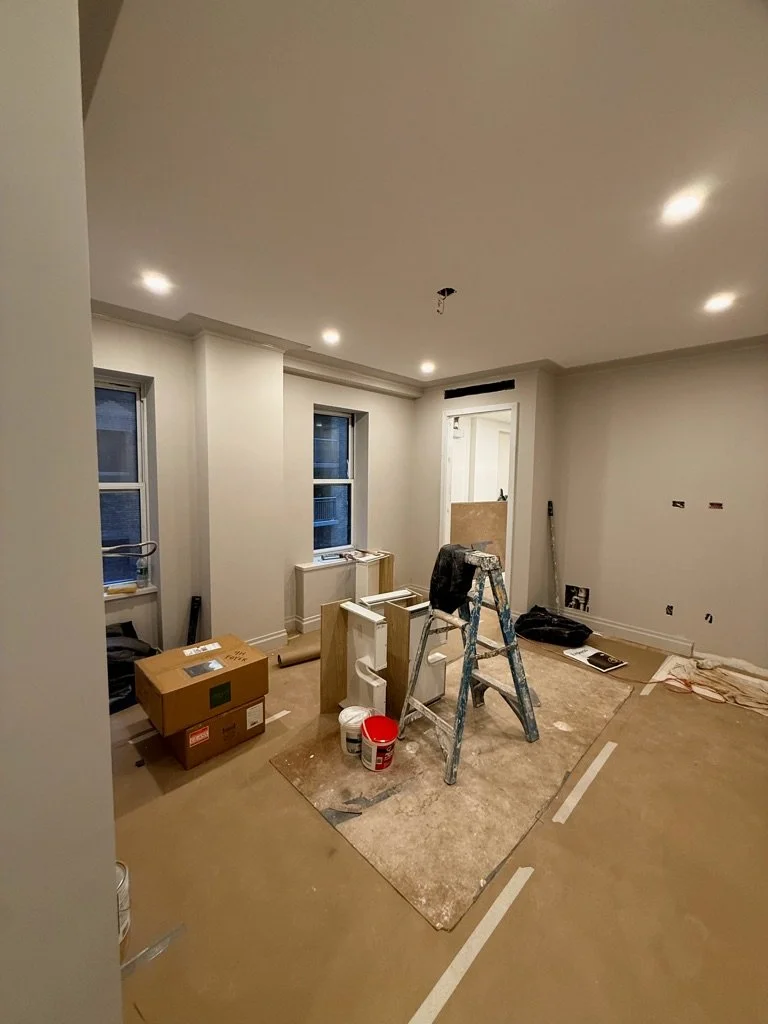
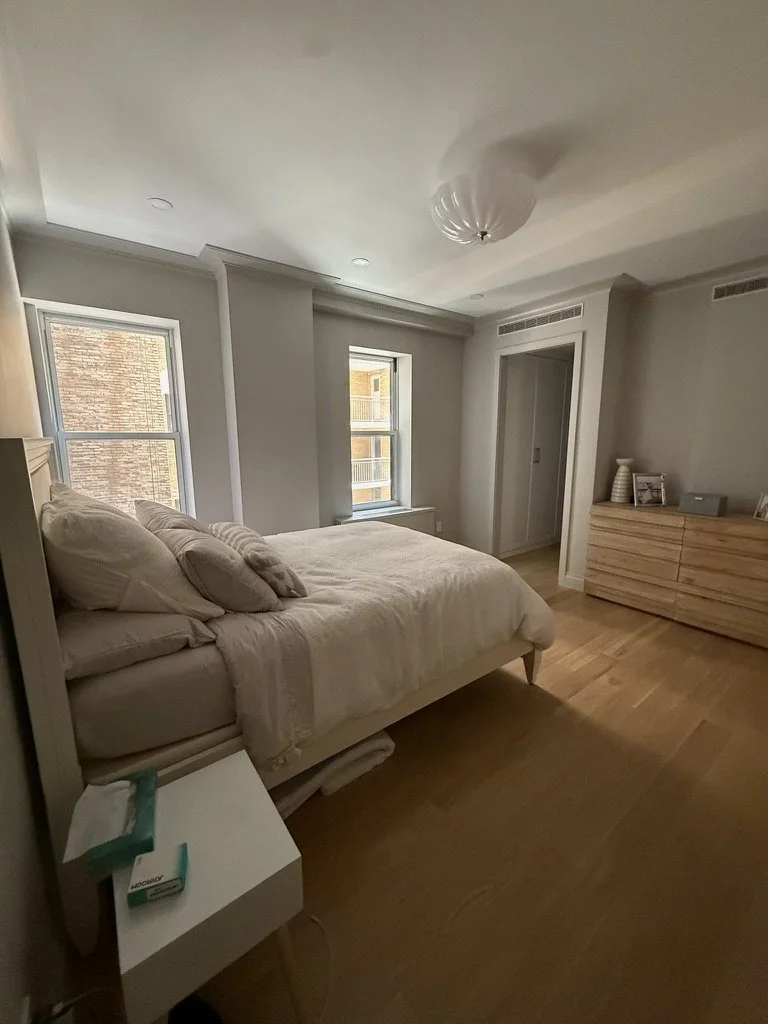
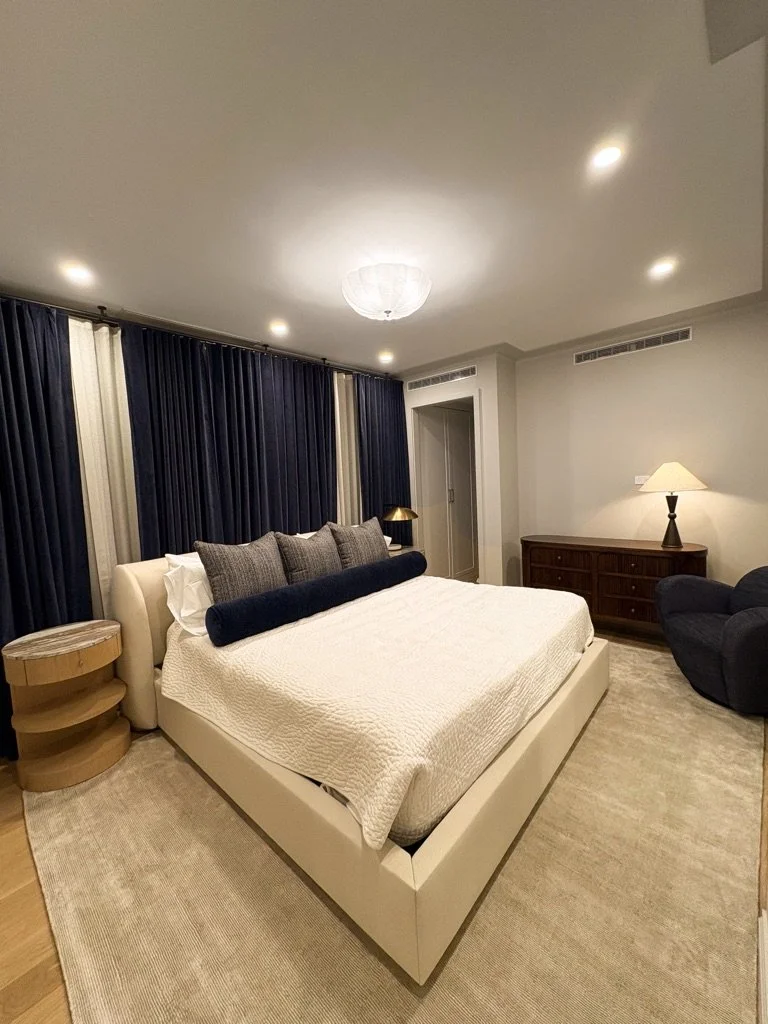
These photos show the room form construction, the first few nights with a queen bed, and the install day with a new king bed. We asked how the first night went, and the client wrote back, ”it was really, really great, and I kept thinking, do I really get to live here?”
If you have trouble going to getting a restful night’s sleep, give the studio a call.